Judgment in the Hiring Room: A Live Run
Six people sit around a conference table. One empty chair at the head. They're about to decide whether to hire a VP of Operations — and every person in that room is running a different algorithm in their skull.
Part 1: Judgment in the Hiring Room: A Live Run — Concept
+5 XP on completion

Six people sit around a conference table. One empty chair at the head. They're about to decide whether to hire a VP of Operations — and every person in that room is running a different algorithm in their skull.

Here's what usually happens: someone loves the candidate's résumé, someone else gets a bad gut feeling, and the loudest voice wins. Twenty-three days of principles, and the room still defaults to volume.

But judgment isn't one skill. It's ten skills firing in sequence — framing the question, checking your confidence, mapping incentives, weighing evidence against narrative, naming what you don't know. You've learned every one of them. Today you watch them work together.
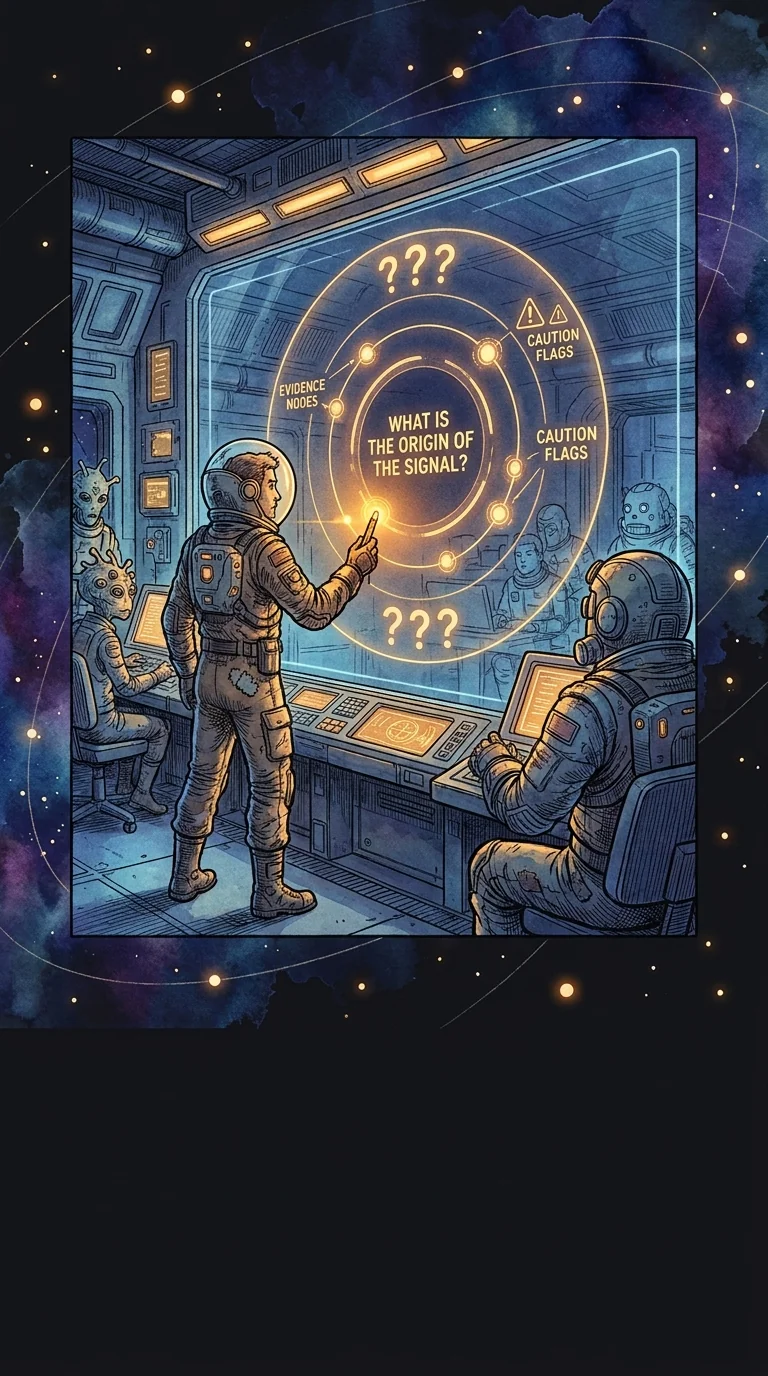
The mechanism is layered, not linear. You start by framing the actual decision (not "is she good?" but "will she solve our specific bottleneck in eighteen months?"). Then you audit your confidence, flag the incentives warping the room, separate track record from charisma, and — this is the part everyone skips — name the three things you can't know yet.

Lisa ran this exact process last quarter. Her team loved a candidate — stellar interview, great references. Then she asked one question: "What's the base rate for outside VPs succeeding in companies our size?" The room went quiet. They hired someone else. That someone else just posted the best ops numbers in three years.

That's judgment working — not as instinct, not as a checklist, but as a living system you built one principle at a time. In Part 2, you'll run the full hiring decision yourself, all ten principles, one candidate, your call. See you there.
Part 2: Judgment in the Hiring Room: A Live Run — Practice
+10 XP on completion

You've seen all ten principles laid out. Now you're going to run them — live, messy, all at once — on a single hiring decision that could reshape a company.

Most hiring panels do this: gut reaction in the first ninety seconds, then three rounds of interviews designed to confirm it. The decision was made before the questions started.

The turning point isn't adding more data. It's slowing down enough to ask each principle its own question — separately, deliberately — before your brain stitches a convenient story together.

The technique: The Ten-Pass Audit. Take the candidate file. Run through it ten times — once per principle. Each pass, write one sentence answering only that principle's question. No blending. No skipping ahead. Ten passes, ten honest sentences, then — and only then — your overall call.

Lisa ran the Ten-Pass Audit on the VP candidate everyone loved. Pass six — incentive alignment — turned up a pattern nobody wanted to see: every past role ended right after the equity vested. Her tenth sentence read: "Brilliant operator. Flight risk by design." The panel thanked her for the three million dollars she just saved them.

You now have a method that turns a single high-stakes decision into ten separate honest conversations with yourself. That's not a checklist — that's a discipline. And it's yours to use on every call that matters from here on out.