The Tradeoff Formula
Every committee room in the galaxy has said it at least once: "We can have speed, quality, AND low cost." Every committee room in the galaxy was lying.
Part 1: The Tradeoff Formula — Concept
+5 XP on completion

Every committee room in the galaxy has said it at least once: "We can have speed, quality, AND low cost." Every committee room in the galaxy was lying.

When you refuse to name what you're sacrificing, you aren't making a decision — you're making a wish. Wishes don't ship on time.

Real decisions have a cost line. The tradeoff formula is almost stupidly simple: for every option you choose, name the one thing it costs you — out loud, on paper, where it can't hide.
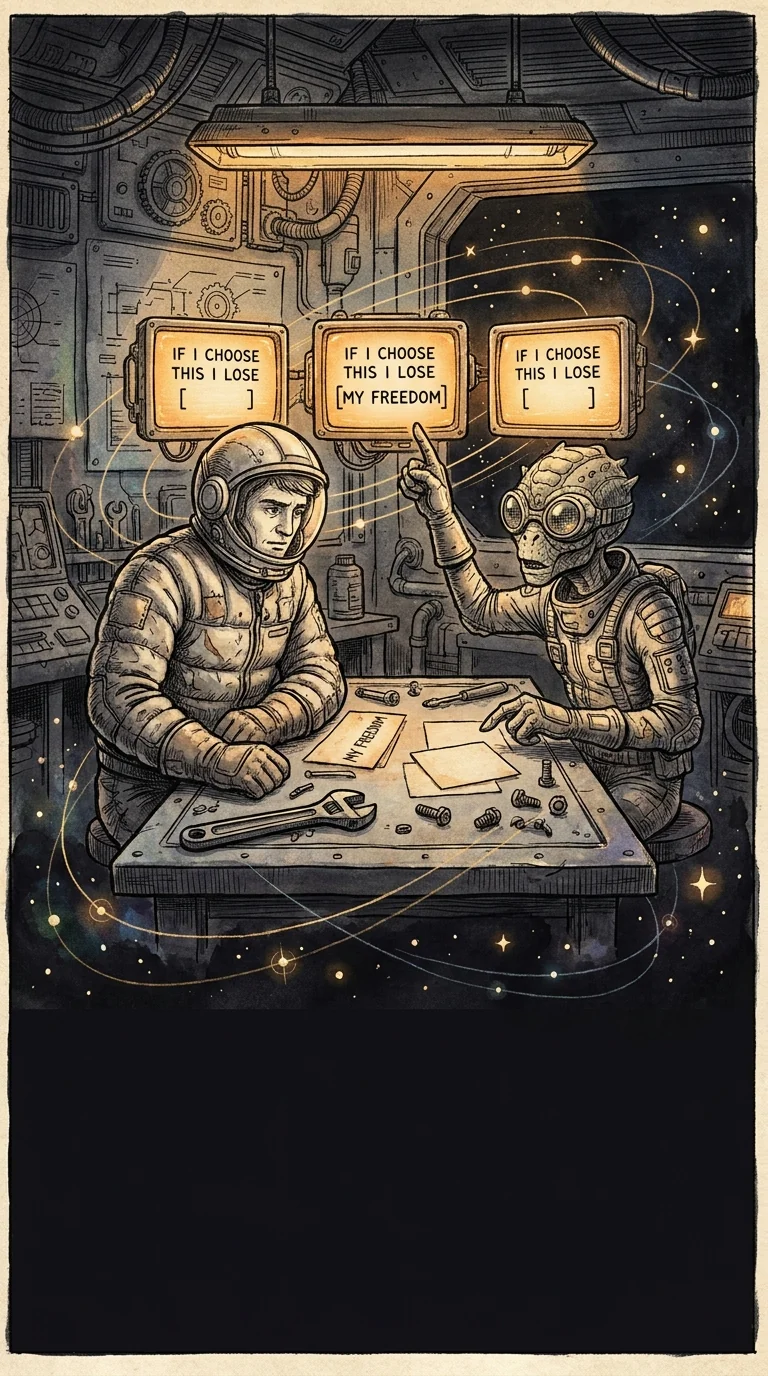
The technique: write down your options. Next to each one, finish this sentence — "If I choose this, I lose ______." If you can't fill in the blank, you don't understand the decision yet.

Marcus ran a supply depot on a mining outpost and spent three weeks telling his crew they could cut delivery times without cutting inspection quality. On week four, a cracked pressure seal made it past the line. He learned the formula the expensive way — every shortcut has an invoice.

Naming the cost doesn't make the decision easier. It makes the decision real — which is the only kind worth making. In Part 2, you'll practice filling in your own tradeoff formula for a decision you're facing right now. See you there.
Part 2: The Tradeoff Formula — Practice
+10 XP on completion

Every decision sacrifices something. The question isn't whether you'll pay a cost — it's whether you'll bother to read the price tag first.
Most tradeoffs stay invisible because we frame decisions as "Should I do X?" instead of "What does X cost me, and am I good with the receipt?" One question feels decisive. The other actually is.

Here's what nobody admits: naming what you lose makes you braver, not weaker. Once the cost is on the table, you stop flinching and start choosing.
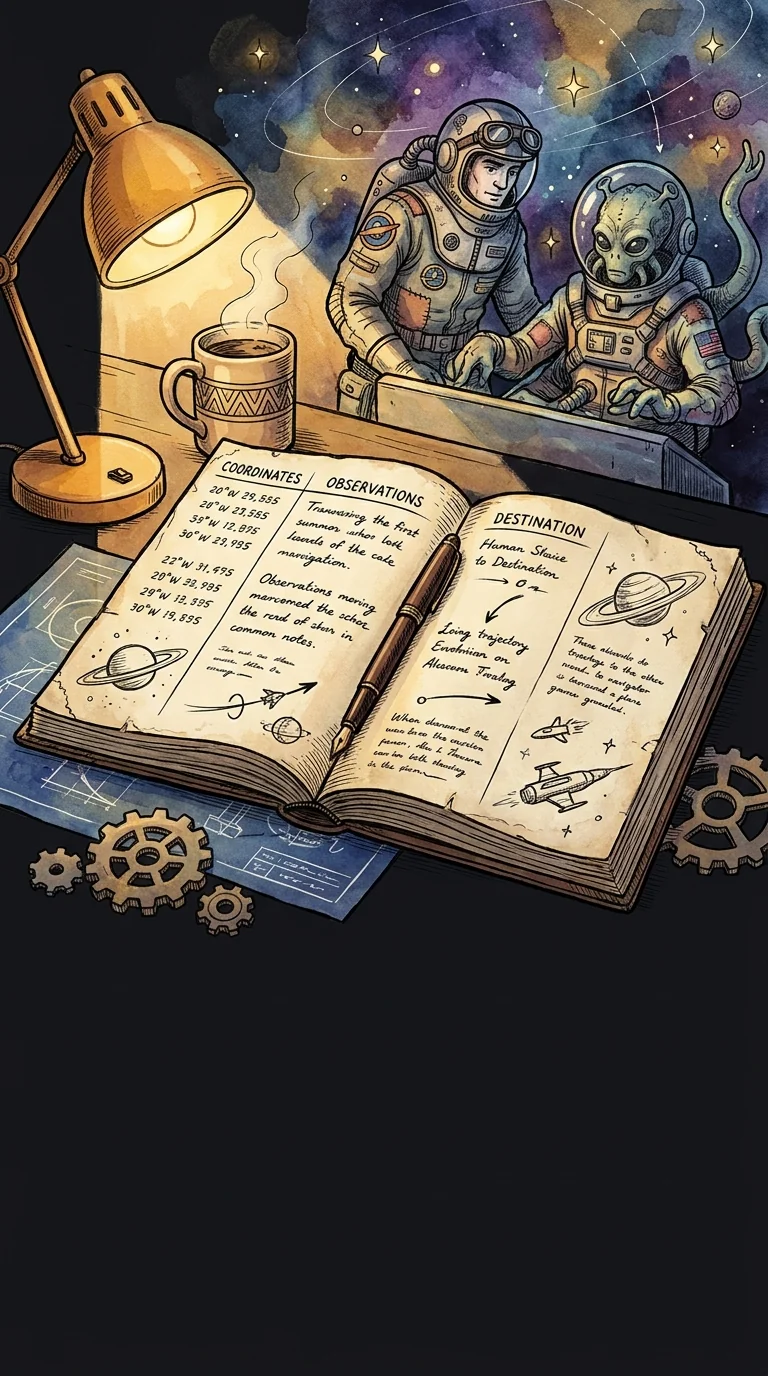
Try the Cost-Benefit-Grief method. Write the decision at the top. Below it, three columns: what you gain, what you lose, and what you'll miss. That third column is where the real answer hides.

Lisa had two job offers — one paid more, one gave her Fridays with her kid. She filled out all three columns. The grief column for the higher-paying job had six entries. The other had one. She picked the one with one, and slept through the night for the first time in weeks.

Next time a decision stalls you, fill in that grief column. You'll find you already know the answer — you were just too polite to say it out loud.