Best Practices Are Someone Else's Telemetry
Someone hands you a map labeled 'best practice' and you feel relieved — until you notice the map is for a completely different planet.
Part 1: Best Practices Are Someone Else's Telemetry — Concept
+5 XP on completion

Someone hands you a map labeled 'best practice' and you feel relieved — until you notice the map is for a completely different planet.

Every 'best practice' was born inside someone else's constraints, someone else's team, someone else's budget crisis at 2 a.m. You inherited the answer but not the question. Convenient, isn't it.

A best practice is telemetry — data recorded by a different crew, on a different route, in different weather. It's useful information. It's not your flight plan.
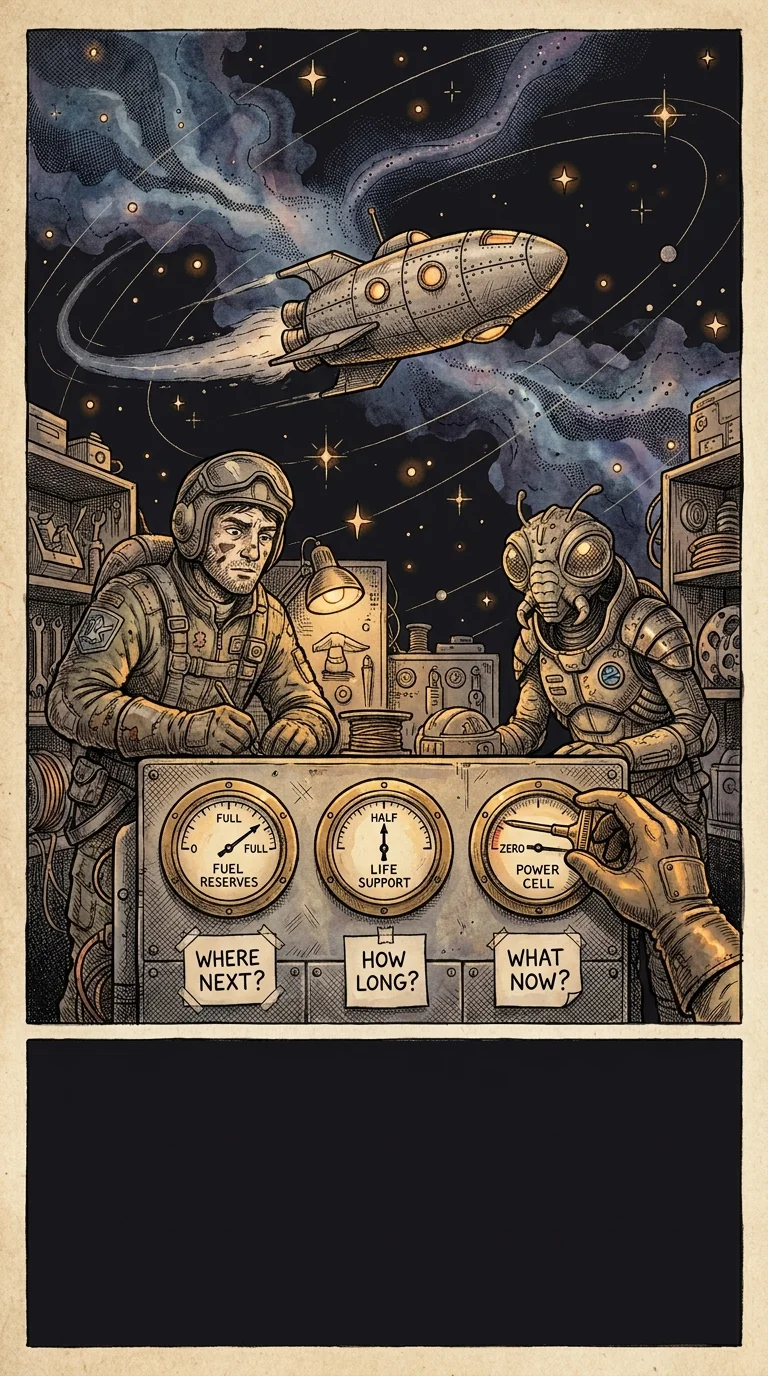
The move is simple: before you adopt any practice, ask three questions. What problem did this solve originally? What's different about my situation? What would I build if this template didn't exist?

Marcus spent six months running his logistics team off a framework borrowed from a company ten times his size. When he finally asked 'what problem did they actually have?' he realized it was a problem he didn't. He scrapped half the process and shipped faster within a week.

Someone else's telemetry can inform your route — but only after you've read your own instruments first. In Part 2, you'll practice stress-testing a best practice against your actual context. See you there.
Part 2: Best Practices Are Someone Else's Telemetry — Practice
+10 XP on completion

Every best practice was born on someone else's ship, flying through someone else's weather. Before you bolt it onto your hull, you should probably check whether it fits.

The default move is to grab someone's playbook and run it unchanged — same metrics, same cadence, same assumptions. It saves you the discomfort of thinking for yourself. Convenient, isn't it.

The technique is called the Context Filter — three questions you run any borrowed practice through before you commit resources to it. Think of it as a customs check for imported ideas.

Question one: What problem was this built to solve — and is that actually my problem? Question two: What constraints shaped it — budget, team size, timeline — and do mine match? Question three: What would I need to change about my situation to make this work, and is that change worth it?

Lisa's new director wanted the team to adopt a rapid-sprint workflow that crushed it at his last company. She ran the Context Filter: his old team had twelve engineers and no clients in the room. Hers had four engineers and weekly client reviews. She kept the sprint cadence, ditched the rest, and her team actually shipped on time.

You don't need to reject every borrowed idea — you just need to stop swallowing them whole. Run the filter. Keep what fits. Rebuild what doesn't. Your ship, your weather, your call.