Learning Rate Beats Perfection
Two pilots launch the same day. One spends six months plotting the perfect route. The other launches twelve rough flights in the same window. Guess who actually reaches the colony.
Part 1: Learning Rate Beats Perfection — Concept
+5 XP on completion

Two pilots launch the same day. One spends six months plotting the perfect route. The other launches twelve rough flights in the same window. Guess who actually reaches the colony.

We worship getting it right on the first try. So we rehearse, plan, delay, polish — and call the stalling 'preparation.' Meanwhile the messy attempts are quietly doing the actual teaching.
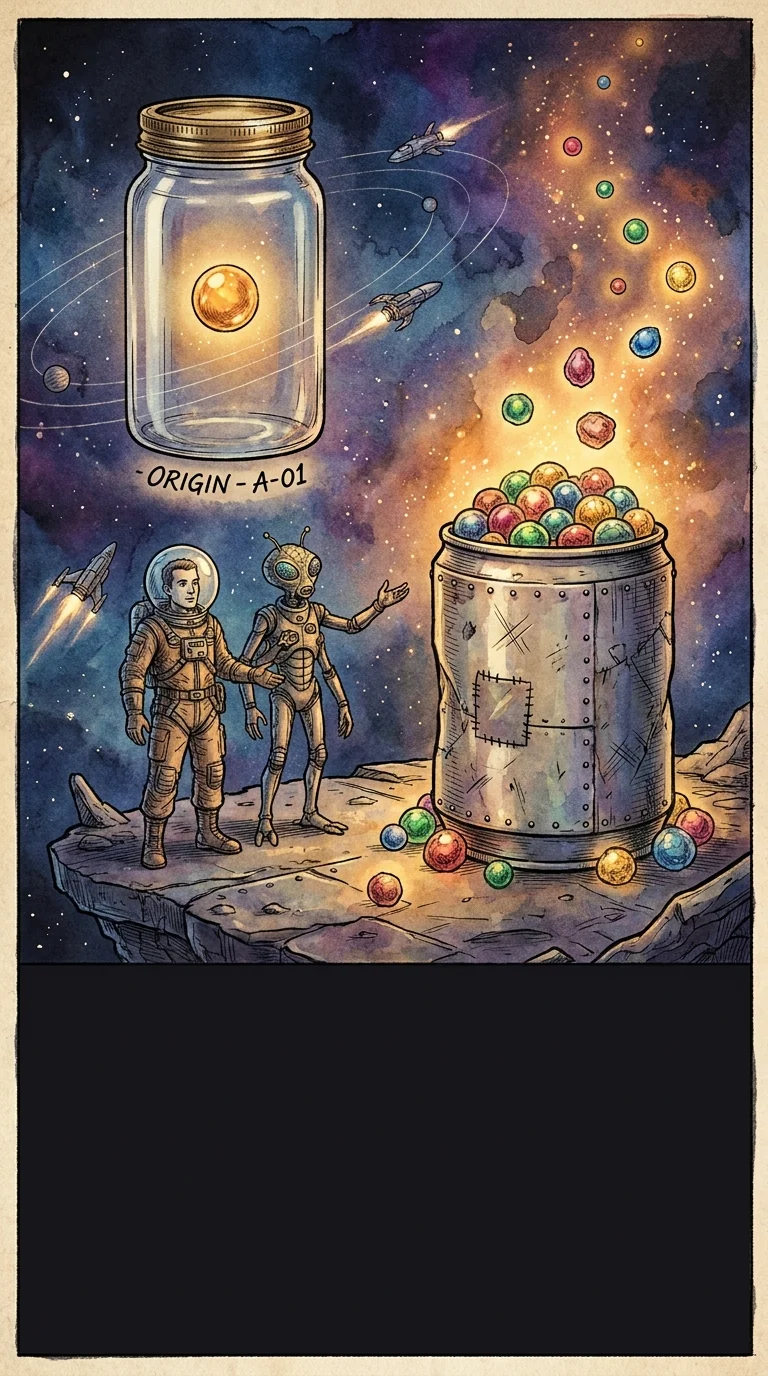
Speed of learning beats quality of the first attempt. Every cycle — try, fail, adjust — deposits one unit of real knowledge. Perfection deposits zero until it ships. Spoiler: it rarely ships.

The mechanism is embarrassingly simple. Shorten the loop: attempt something small, notice what broke, fix that one thing, go again. Each loop takes days, not months. You're not failing — you're sampling reality at a higher frequency.

Marcus spent four months designing a cargo routing algorithm before showing anyone. Lisa built a rough version in a week, let it crash three times, and fixed each crash in days. By month two, Lisa's ugly prototype outperformed Marcus's blueprint — because it had met actual cargo.

The winner isn't who gets it right first — it's who runs the most loops before everyone else finishes planning. In Part 2, you'll practice designing your own rapid-loop experiment for a real goal you're stuck on. See you there.
Part 2: Learning Rate Beats Perfection — Practice
+10 XP on completion
Speed of learning beats quality of guessing. So the real question is: how do you build a system that makes you learn faster on purpose?

Most attempts at something new die in the planning phase. You research, outline, refine, and polish — and six weeks later you've produced exactly nothing the world can react to.

Enter the Rapid Cycle Loop. Instead of one big polished attempt, you run small, fast, ugly experiments — and after each one, you ask three specific questions that extract the lesson before you go again.

Here's how it works. Do the smallest testable version of your idea — give it two days max. Then answer: What surprised me? What would I change immediately? What's the one next experiment? Write those answers down, then go again. That's it.
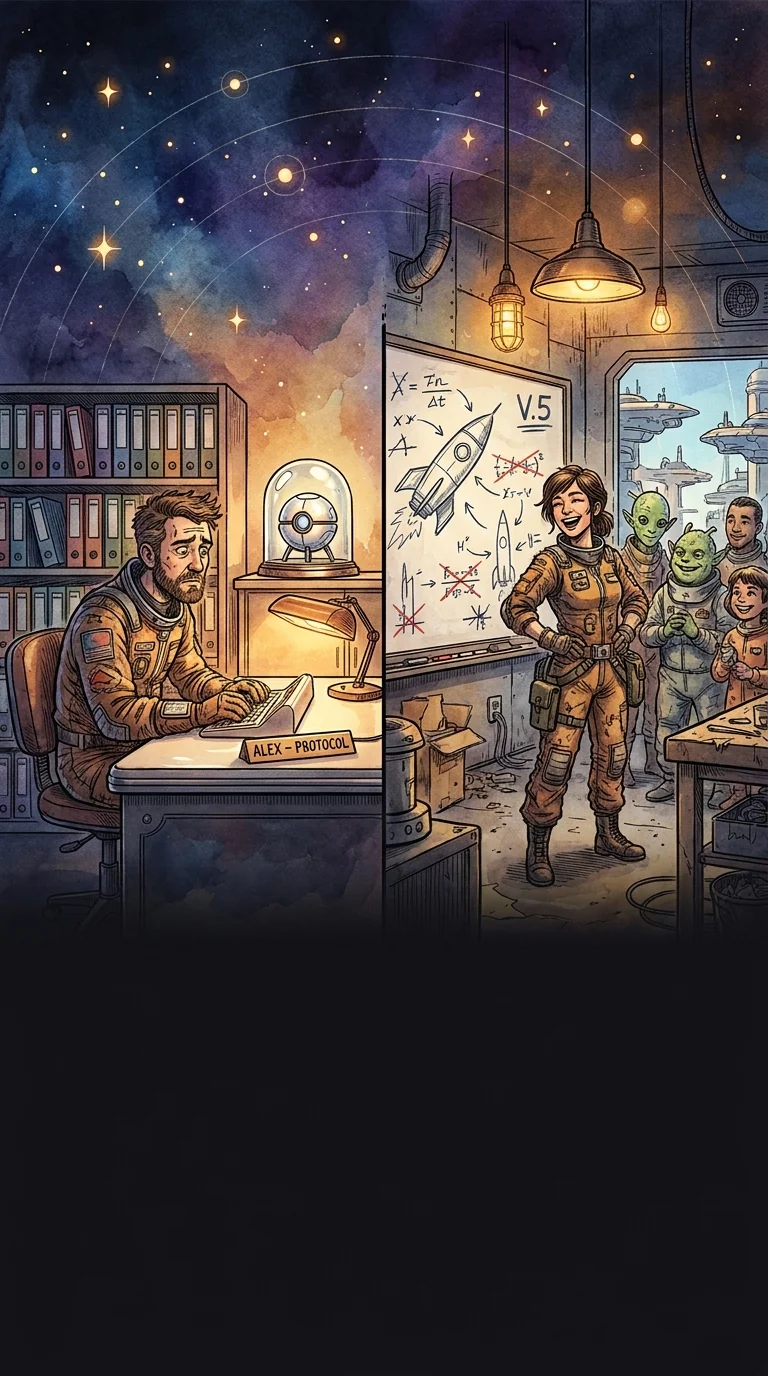
Alex spent three months designing the perfect workshop curriculum. Maria built a rough version in a weekend, taught it once, and rewrote half of it Monday morning. By the time Alex launched, Maria was on iteration five — and it wasn't close.
You don't need a better first draft. You need a faster second one, and a third one after that. Run the loop this week — pick something, make it ugly, ask the three questions, and go again. Your learning rate is about to become your unfair advantage.